


Iran’s Retaliatory Attacks in the Middle East Reveal a Desperate Strategy to Reshape the Regional Balance of Power
The scale of Iran’s Retaliatory Attacks in the Middle East shows a regime that is no longer reacting. Rather, it is escalating with intent. Iran’s retaliatory attacks in the Middle East are not random bursts of anger; they are calculated moves designed to widen the battlefield and reshape regional power dynamics.
Historically, powerful states have relied on doctrines of mutual destruction. Israel has long been associated with the alleged Samson Option. The United States and the Soviet Union structured Cold War deterrence around mutually assured destruction. Iran now appears to be operating within a similar psychological framework: if it cannot secure stability, it will ensure instability for everyone.
According to Al Jazeera, Iran’s retaliatory attacks in the Middle East targeted U.S. military assets across Bahrain, Qatar, the UAE, and Iraq. Bahrain reportedly suffered damage connected to the U.S. Navy’s Fifth Fleet headquarters. Abu Dhabi recorded casualties. Qatar, Kuwait, and Saudi Arabia claimed to have intercepted missile barrages. Iraq’s Kurdish region, where U.S. troops are stationed, also came under attack.
The pattern behind Iran’s retaliatory attacks in the Middle East is clear: Tehran is expanding pressure across multiple fronts simultaneously.
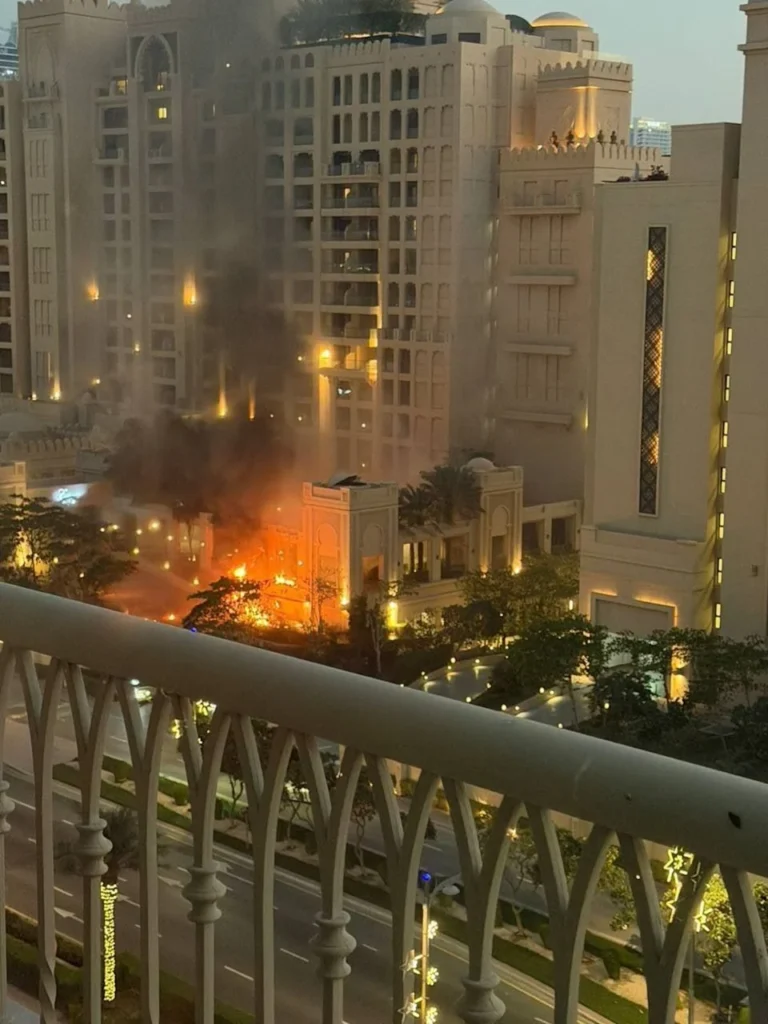
Reports and footage circulating online allegedly show fires in residential zones following drone strikes. BBC confirmed that a luxury hotel in Dubai was struck during the escalation. This suggests Iran’s retaliatory attacks in the Middle East are not confined strictly to isolated battlefield targets. The psychological message is broader — no location hosting American or allied assets is beyond reach.
Why adopt such a dangerous strategy? Because chaos may be Iran’s last remaining leverage.
By intensifying Iran’s retaliatory attacks in the Middle East, Tehran increases diplomatic urgency. The more countries affected, the louder the calls for de-escalation. The more instability spreads, the faster global actors push for renewed negotiations. Chaos becomes a bargaining chip.
Interestingly, Oman appears largely untouched. Oman has historically served as a mediator between Tehran and Western powers. The selective nature of Iran retaliatory attacks in the Middle East reinforces a pattern: pressure adversaries, spare mediators, and reshape diplomatic calculations through force.
The escalation reportedly followed the killing of Iran’s Supreme Leader, Ali Khamenei, alongside senior officials — a development that would inevitably trigger vows of revenge from the Revolutionary Guard. Since then, claims suggest dozens of bases hosting U.S. forces have been struck. Israeli-linked facilities have also reportedly been targeted.
Each wave of Iran’s retaliatory attacks in the Middle East signals that Tehran is prepared to exhaust military options before conceding strategic ground. This is not a restrained response. It is a demonstration of resolve — perhaps even desperation.
Iran understands the precarious position it occupies. Economic strain, diplomatic isolation, and military pressure leave few comfortable choices. Expanding Iran retaliatory attacks in the Middle East risks unifying its enemies, yet refraining risks appearing weak at home and abroad.
This is the gamble: overwhelm the region with enough instability that adversaries are forced back to dialogue. Create consequences so widespread that continued confrontation becomes too costly.
Iran’s retaliatory attacks in the Middle East therefore represent more than retaliation. They are an attempt to reset the strategic chessboard through escalation. Whether this approach secures Iran breathing space or accelerates its isolation remains uncertain.
One thing, however, is unmistakable: Iran is not signaling restraint. It is signaling that if it faces defeat, it will ensure the region feels the shockwaves alongside it.
To follow the ongoing conflict between Iran and the US-Israel coalition, check out the linked articles above. To read similar news we have covered, check out our news piece on the Pakistan-Afghanistan Conflict.
